
Without reliable energy, no economy can expand. Across Southern Africa, energy decisions carry enormous consequences. Getting the economics right is not optional. It is foundational.

Across Southern Africa, energy decisions carry enormous consequences: for government finances, for industrial competitiveness, for household welfare and for the pace of transition away from fossil fuels. Getting the economics right is not optional. It is foundational.
StratEcon has been providing energy economics analysis across South Africa, Namibia and Zimbabwe for over two decades. Our work spans the full range of energy sector questions: the economic and environmental viability of renewable energy, the macroeconomic implications of electricity tariff changes, the case for electrification programmes in low-income communities and the economic feasibility of large-scale hydroelectric infrastructure.
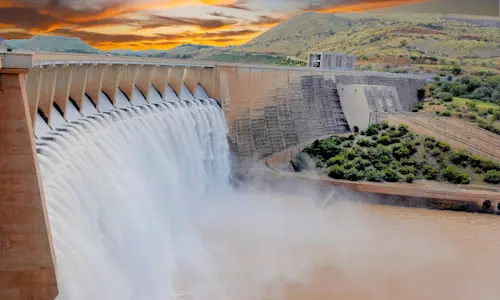
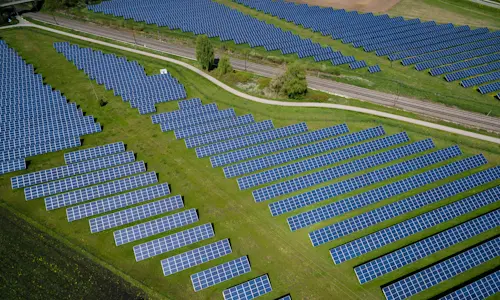
Southern Africa’s energy mix is changing. Governments and utilities face difficult choices about which generation technologies to support, how to price the transition and how to manage its distributional consequences. StratEcon assesses the economic, social and environmental viability of incorporating renewable energy into the generation mix, including the costs and benefits of solar, wind and hydroelectric options against conventional alternatives. We also provide the analytical underpinning for energy policy and white paper processes.
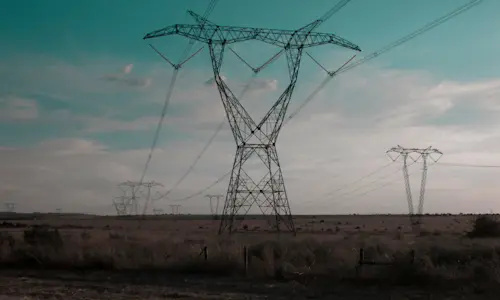
Electricity pricing decisions ripple through an economy in ways that are not always visible on the surface. An increase in tariffs affects industrial competitiveness, household welfare, inflation and public finances simultaneously. StratEcon has developed dynamic computable general equilibrium (CGE) models specifically designed to quantify these economy-wide impacts, enabling regulators and government departments to understand the full consequences of pricing decisions before they are made.
Extending electricity access to low-income and rural communities involves more than connecting households to a grid. It requires a careful assessment of the economic viability of different delivery models, the design of appropriate subsidy and support mechanisms and the quantification of social and developmental benefits that go beyond conventional cost-benefit metrics. StratEcon has developed methodologies for capturing these layered benefits, from basic lighting and safety gains through to the productivity and income effects of deeper energy access.
StratEcon’s energy economics practice is one of the most established in South Africa, with a body of work spanning more than two decades and three countries.
In Namibia, we developed a dynamic CGE model for the Electricity Control Board (ECB) to quantify the macroeconomic impact of electricity price changes and new generation options on the Namibian economy. First developed in 2009/10, this model has been updated in 2013, 2018 and 2023 and continues to inform energy pricing decisions in Namibia. We also developed the economic component of an Electricity Support Mechanism for lower-income households and provided macroeconomic analysis of renewable energy options for the Renewable Energy and Energy Efficiency Institute (REEEI).
In Zimbabwe, we developed the economic component of the Renewable Energy Master Plan for the Zimbabwe Rural Electrification Agency, developing algorithms to maximise the socio-economic returns of the rural electrification programme across the country.
In South Africa, we contributed to the rewriting of the White Paper on Renewable Energy for the Department of Energy, and assessed the economic feasibility of establishing a Solar Water Heater industry in the Western Cape for the City of Cape Town’s Energy and Climate Change Unit. Across the border, we conducted the economic feasibility assessment of the Batoka Gorge Hydroelectric Scheme on the Zambezi River for the Zambezi River Authority, one of the most significant proposed energy infrastructure projects in Southern Africa.
Energy economics demands a rare combination of technical depth and practical judgement. Tariff models, CGE frameworks and renewable energy appraisals are only useful if they are grounded in a real understanding of how energy markets and regulatory institutions work in developing country contexts. That is knowledge that takes years to build.
StratEcon has been active in energy economics across Southern Africa since the mid-2000s. Our long-standing relationships with regulators and government agencies in Namibia, Zimbabwe and South Africa reflect the trust that comes from rigorous, independent analysis consistently delivered. That track record is difficult to replicate.
StratEcon works with energy regulators, government departments, development finance institutions and private sector clients on energy economics across South Africa and Africa. Contact us to arrange a no-obligation introductory discussion.
We use cookies to improve your experience on our site. By using our site, you consent to cookies.
Manage your cookie preferences below:
Essential cookies enable basic functions and are necessary for the proper function of the website.